

Inventory management is the systematic process of overseeing and controlling a company’s stock of goods, whether they are raw materials, work-in-progress items, or finished products.
Accurate inventory data is critical to business success because inventory information impacts everything from customer fulfillment to financing. When inventory counts are incorrect, company’s operations, efficiency and profitability all suffer. Inaccurate comprehensive count prevents companies from forecasting accurately, which may lead to over-order inventory or find they don’t have enough stock on hand to keep their commitments to customers.
Companies often choose between physical inventory and cycle counting. Cycle counting is an ongoing, partial inventory check done without stopping operations, while physical inventory is a full, infrequent, wall-to-wall count often requiring a business shutdown. Cycle counting improves accuracy continuously, whereas physical inventory provides a complete snapshot for annual auditing purposes.
- Methodology: Small, subset counts performed on a daily or weekly rotation.
- Operation: Does not require stopping warehouse operations (shipments/receiving continue).
- Frequency: Continuous, often focusing on high-value or fast-moving items.
- Efficiency: Less labor-intensive per session, allowing for quicker issue identification.
- Methodology: A total count of every SKU in the warehouse at once.
- Operation: Often requires a “shutdown” of operations to freeze inventory movement.
- Frequency: Usually done once a year or quarterly (annual physical count).
- Efficiency: Highly labor-intensive, requiring significant manpower over a short period.
Key Differences
- Frequency: Continuous vs. Annual.
- Scope: Subset vs. Total items.
- Operations: Active vs. Shutdown.
- Purpose: High accuracy vs. Audit requirement.
Many businesses combine both, using cycle counting to maintain daily accuracy and physical inventory for end-of-year reconciliations.
In a conventional physical count, an organization sets aside several days to count every single item in inventory, across all warehouses, stores and other locations. The result is a comprehensive count that serves as a means of checks and balances to ensure what you have on the shelves is accurately represented in your inventory management system.
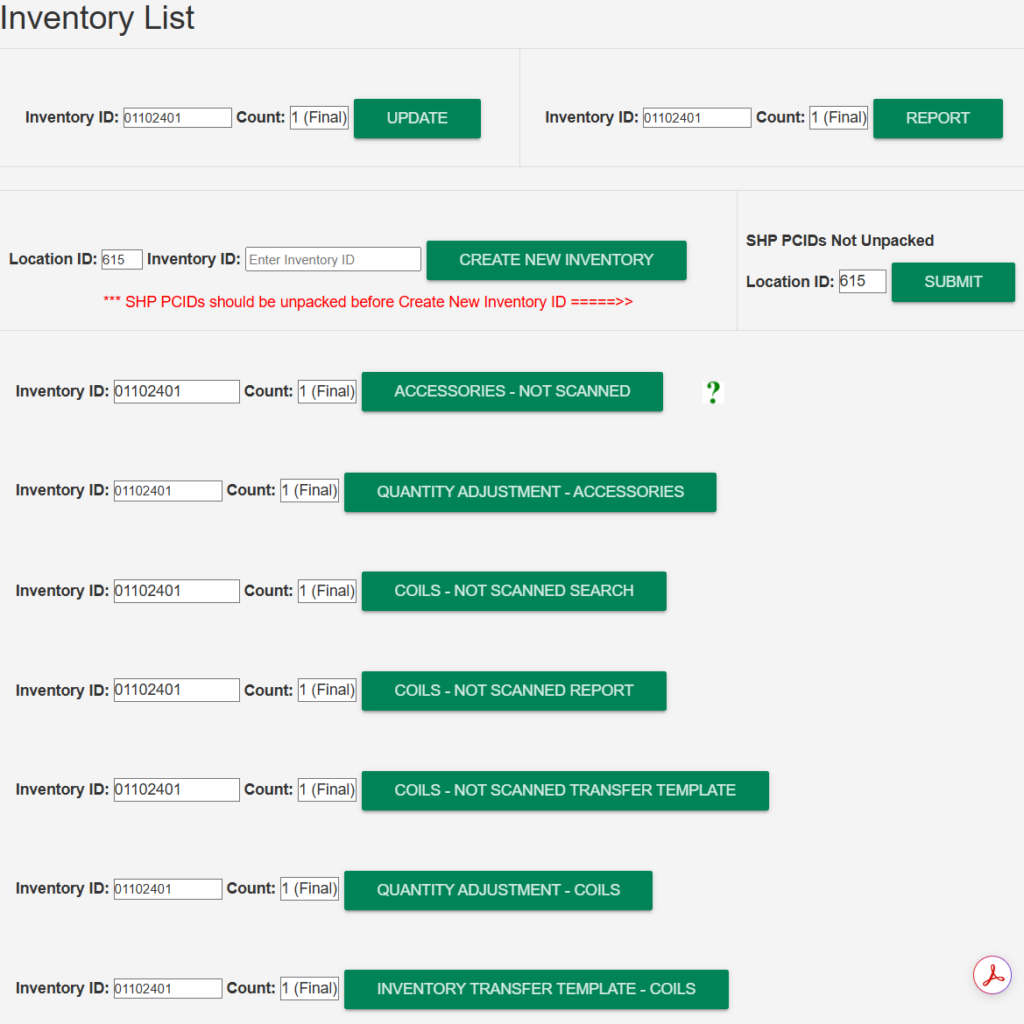
Inventory Management System for Epicor